Posted August 2nd 2025
Hello and welcome, I’m so glad you’ve found your way here!
My name is Fiona and I’m a genealogist based in the Fens near Ely, with deep roots in East Anglia and Ireland. This blog is a place to share family stories, local history and practical tips to help others connect with their past.
How it all started
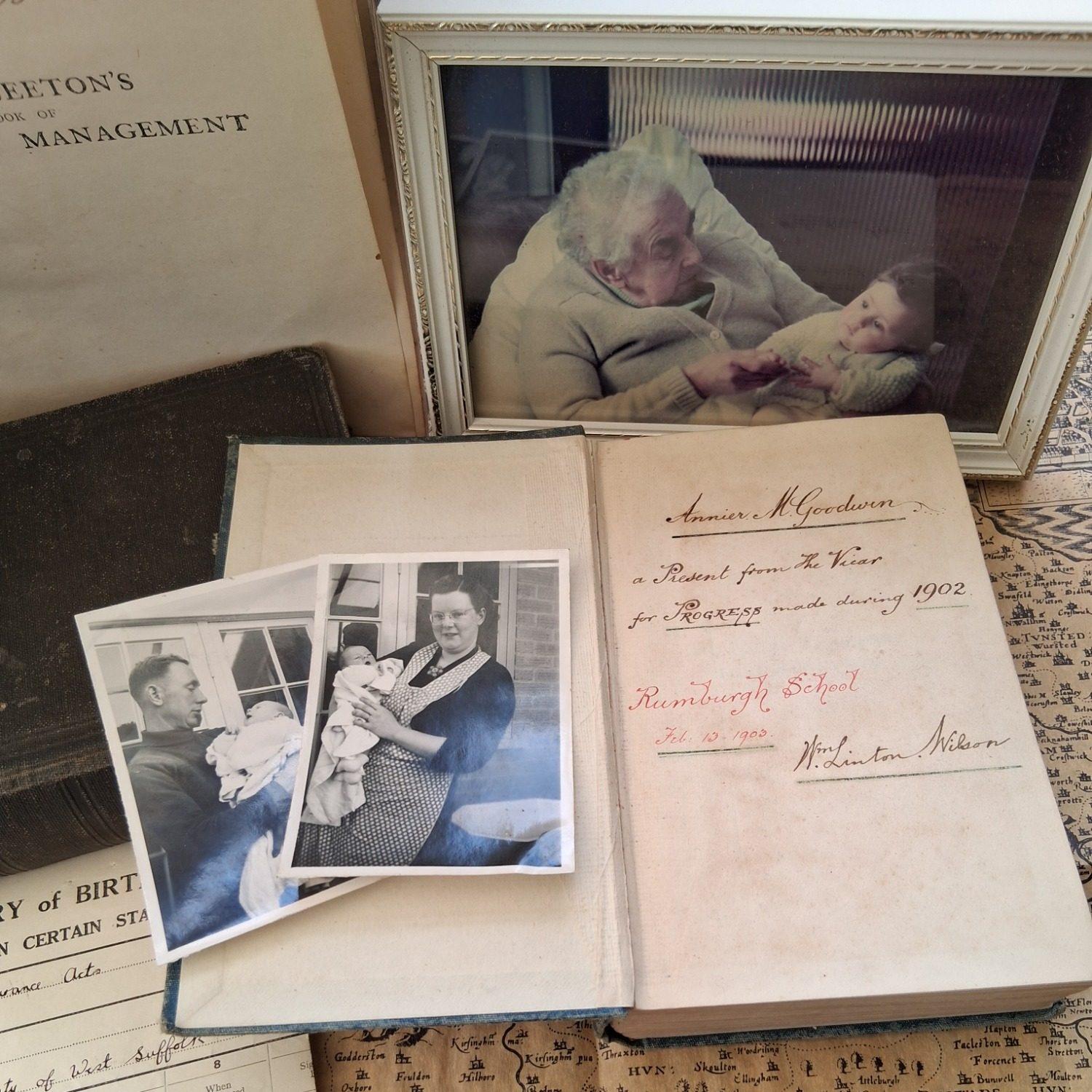
My journey into genealogy began after the death of my beloved grandmother. I inherited a chest full of family heirlooms. Inside were photos, war medals, letters, certificates and tiny objects which held so much silent meaning. They were the fragments of lives lived long before mine. I had always loved history, as a child I was drawn to stories of the past, castles, museums and my family’s cottage in Ireland where many ancestors had been born and died. I continued my passion, focusing on historical subjects during my degree. I was always interested in the lived experience of everyday people rather than just the big names and battles. However, it was that chest of treasures, heavy with memory and mystery which truly set me on this path.
What I’ve learned and why it matters
Genealogy for me isn’t just about names and dates, it’s about connection. It’s about understanding how our ancestors lived, loved, struggled and survived. It’s also about giving them the dignity of being remembered. In researching my own family, I have found chimney sweeps, agricultural labourers, dockworkers and farmers who have struggled through hardships, famine, illegitimacy and loss. I realised that I wanted to help others to do the same because every family has a story worth telling.
Following the threads
As I sifted through the contents of the family chest, I began to ask myself questions: Who were these people? What were they like? What happened to them? One clue led to another, a census record, a parish register, a marriage registration and even local newspaper articles started to paint a picture and before long, I was hooked.
One line of my family, the Taylors were chimney sweeps in Bury St Edmunds for generations. That discovery opened up a world of Victorian hardship and quiet resilience. Another branch of my family led to the dockyards of Newcastle where my ancestors lived in extreme poverty. They were often separated from their loved ones for long periods, sometimes indefinitely as work and hardship shaped their lives. On the other side of my family are generations of Irish farmers who endured the Great Famine and lived through times of profound change as Ireland moved towards independence. I came to feel that I wasn’t just researching, I was beginning to know people I never had an opportunity to meet.
Why I started this blog
Over time, genealogy became more than a hobby. It became a passion and a calling, a way to connect the dots not just in my family tree but in others too.
This blog is a space to:
- Share stories from my own research
- Explore the rich history and folklore of East Anglia
- Offer tips and tools for those starting their family history journey
- Reflect on why the past still matters today
Let’s explore the past together
Thank you for reading. If you’ve inherited old family items, have a mystery ancestor or just want to start building your tree but don’t know where to begin, I’d love to help. Send a message or just follow along as I share more tales from the archives. There’s something powerful about finding out where and who you come from.
Here’s to uncovering the stories that made us.
Fiona Clare
Genealogist | History lover | Keeper of stories
Posted 15th September 2025
Hello and welcome to my September blog where I am thinking about my agricultural ancestors.
As I drove along at the weekend, I noticed the leaves on the trees starting to turn and I am reminded of how much I love the autumn season. I look forward to warm cosy evenings in front of my stove and crisp autumn walks with my dog. This got me thinking about my ancestors and those I have researched for other families. September marks the harvest season, the busiest and most important time of the year in rural communities across the U.K. and Ireland. For many, myself included, my ancestor’s lives revolved around the land and the changing seasons, shaping their family and community survival.
By the 19th century, agricultural labourers often recorded simply as “Ag Lab” in the census made up the largest occupational group in England. In Ireland, farming and tenant labour underpinned rural society. Yet these ancestors are often overlooked because their lives were less documented than those of wealthier landowners.
Harvest was at the heart of their year. It dictated employment, migration patterns, and even family stability. A large proportion of my family in England and Ireland were agricultural labourers and farmers. Their stories remind me of how central harvest was to their world. By looking at the right records, you can find a wealth of information on your land working ancestors.
Records that help bring harvest to life:
Fortunately, there are many records that allow us to trace the lives of agricultural ancestors:
- UK Census Returns: From 1841 onwards, census records in England and Wales regularly recorded occupations. If you see “Ag Lab”, “Farm Servant” or “Farmer”, you’re glimpsing a life tied to the harvest.
- Parish Registers: Baptisms, marriages and burials often root families to rural parishes for generations. I have found many cases where children are baptised in the latter half of the year despite being born much earlier. Many marriages also took place in the autumn/winter months. The reason being that people’s daily lives revolved around the land and so the time for celebrating rites of passage generally happened at the end of the growing season when the work was done.
- Tithe Applotment Books: Unfortunately, many Irish records were destroyed during the fight for independence. This means that anyone tracing Irish ancestry often needs to look elsewhere to fill in the gaps. The Tithe Applotment books were 19th-century records showing who farmed or occupied plots of land. They are fantastic for pinpointing ancestors where census returns are unavailable.
- Estate and Employment Records: Surviving farm accounts, wage books, and estate papers sometimes list names of labourers, especially around harvest time when extra workers were hired.
- Poor Law Records: Harvest failures could lead to destitution. Overseers’ accounts and settlement papers often reveal when families sought relief during lean years. Many of these records are available in local archives.
- Newspapers: Local papers reported on everything from the outcome of the harvest to accidents in the fields. They also covered hiring fairs (often held at Michaelmas in late September) where agricultural workers sought new employment.
- Irish Land Records: In Ireland, Griffith’s Valuation (1847–1864) and estate rentals are invaluable for identifying tenant farmers and the land they held. Combined with parish registers, they provide a rich picture of life on the land.
Imagining daily life:
Across the country, harvest was celebrated with hiring fairs where agricultural labourers might change employers for the coming year. The East Anglian landscape was central to my own ancestors’ lives where wheat, barley and later sugar beet shaped both work and community identity.
In Ireland, the potato harvest was crucial for survival. The devastation caused by the Great Famine in the 1840s highlights just how fragile rural life could be. But there were traditions of joy too such as “the last sheaf,” where the final bundle of grain was cut ceremonially and sometimes fashioned into a corn dolly for good luck.
Folklore also surrounded the harvest season. Superstitions about weather, the fertility of the land and the spirit of the crops were woven into daily life adding a human dimension to the bare facts of records.
Bringing Ag Labs to life:
It is always easy to overlook agricultural ancestors as just labourers but imagine them working from dawn to dusk, whole families of men, women and children toiling away because their survival depended upon it. Imagine them facing the anxiety of a poor harvest or failed crop. Close your eyes and imagine the community celebrations and traditions which agricultural ancestors would have taken part in. Understanding harvest traditions turns them from names on a document into people with hopes, dreams, hardships and communities.
Your family:
If your family tree has agricultural workers, harvest time offers a powerful way to connect with their lives. Their stories may not be written down in history books but they are the foundation of rural heritage.
Posted 8th December 2025
Unlocking Family History Through Christmas Cards: A Genealogist’s Guide
People have been sending Christmas well-wishes for generations, but did you know that the first commercial Christmas card was the idea of Sir Henry Cole 182 years ago! Searching for a quicker way to send festive greetings, he commissioned artist John Callcott Horsley to design the very first card in London in 1843.
The scene Horsley created is a beautiful snapshot of Victorian ideals: a family gathered around a table, sharing food and wine whilst scenes of charity play out in the background. It sets the tone for what we now recognise as a ‘traditional Christmas’.
But why tell you this? How does it connect to genealogy?
Because at this time of the year, many of us unknowingly hold one of the most powerful yet often overlooked family history resources in our own homes… the humble Christmas card.
Yes, those colourful, glittery, sentimental bits of folded card we often recycle in January can contain huge amounts of genealogical evidence and here’s how to uncover the stories hidden inside them.
- Clues to Family Relationships
The way someone addresses a Christmas card can reveal or confirm family relationships. Look for clues such as:
- “To cousin Mary”
- “Dearest Mama”
- “To Nana from all of us”
These seemingly simple greetings can help you map out who belonged to whom. Grouped names like “love from John, Carol and Samantha” can even help reconstruct entire households. In my own research, old family Christmas cards have helped me piece together great-aunts, uncles and even great-great-relations that were otherwise tricky to confirm.
- Addresses as Mini Timelines
Older cards often included a return address and, if you are lucky enough to have possession of the original envelope (yes, I know it’s tricky but not impossible I assure you), then they can be genealogical treasures.
Addresses of both the sender and recipient can help you:
- Track family migration
- Identify who lived together at different times
- Place relatives in a specific location between census years
For periods with limited surviving records, these small clues can fill surprisingly large gaps.
- Short Messages Speak Volumes
Christmas card messages are often brief, but don’t underestimate them. Sometimes, those short lines hold golden nuggets of information.
You might find:
- Family updates
- Health News
- Birth, marriage or death announcements
- Mentions of family difficulties
- Clues about job changes or relocations
These snippets can offer insights into your relatives as real people, living through real events.
- Military Details Hidden in Christmas Cards
Christmas cards from early to mid-20th century can be particularly revealing for military research.
They can reveal:
- Return addresses from bases or barracks, common in WWII or National Service
- Ranks or regiments included in the sender’s signature
- BFPO markings (British Forces Post Office) indicating overseas postings (the same can be said for APO addresses of American military)
- Censored or redacted wartime messages can still reveal movement plans
In my own collection, one of my favourite discoveries is a redacted Christmas card sent by my grandfather. Although it gives little explicit details, the markings clearly identify his rank and his location near Bethlehem during WWII.
- Photographic Cards and Identifying Relatives
In recent decades, many families have embraced photo Christmas cards. These are fantastic genealogical tools that can help:
- Put names to faces
- Spot resemblances across generations
- Date images using clothing and hairstyles
Also remember that today’s cards are tomorrow’s historical documents. Even if you know everyone pictured now, future generations may not so consider labelling and preserving them for the long term.
- How to Preserve Christmas Cards for Future Research
Once you’ve gathered your Christmas cards, the next crucial step is preserving them properly. Here’s how to turn them into lasting genealogical resources.
- Keep key envelopes attached whenever possible
- Store cards in acid-free sleeves
- Photograph or scan them for your digital archives
- Add metadata e.g. year, sender, recipient and/or location
- Group cards by family branch or household
By doing this, you’re not only helping your current research but you’re also creating an incredible archive for those who will follow in your footsteps.
Final Thoughts
Christmas cards are more than festive cheer, they’re snapshots of relationships, history and identity. These cards can enrich your understanding of your ancestors in truly meaningful ways. So, before you recycle them in January, take a closer look, you might just uncover a story you’ve been searching for.
Need Help Uncovering the Stories in Your Own Family Archive?
If you’d like support analysing family documents, building your family tree or uncovering hidden stories in your history, I’d love to help.
I am a professional genealogist based in the UK, specialising in bringing ordinary ancestors’ stories to life.
Get in touch via my website or email me directly to start your family history journey.